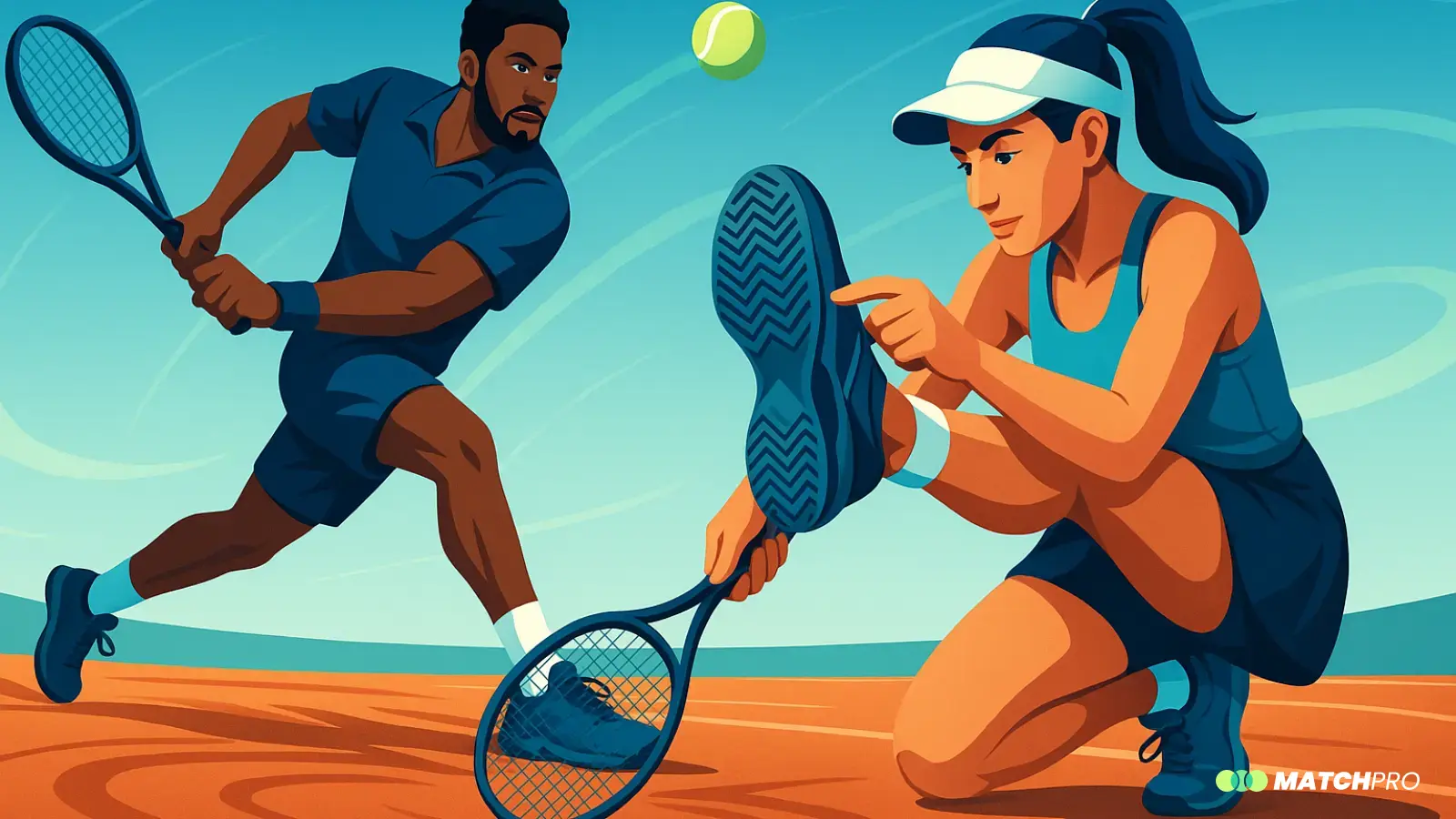
Understanding Sole Wear on Clay Courts
Tennis is a sport that demands agility, speed, and precision. The surface you play on can significantly affect your performance, and clay courts are known for their unique characteristics. Understanding how your footwear interacts with this surface is crucial, especially when it comes to identifying sole wear patterns. This guide will help intermediate players recognize and address sole wear on clay court shoes.
The Nature of Clay Courts
Clay courts are made from crushed shale, stone, or brick. They are known for their slow playing surface, which can affect the bounce of the ball and the movement of players. The loose surface allows for sliding, which is a common technique used by players to reach balls quickly. However, this sliding action can contribute to specific wear patterns on your tennis shoes.
Common Sole Wear Patterns
-
Toe Dragging: Many players, especially those who slide into their shots, will notice wear at the toe area of their shoes. This is due to the forward motion and the need to stop quickly.
-
Outer Sole Wear: Players who rely heavily on lateral movements may find that the outer edges of their shoes wear down faster. This is common among players who play aggressively from the baseline.
-
Heel Wear: Some players might notice excessive wear on the heels of their shoes. This can be due to the way they plant their feet when serving or when making quick stops.
Identifying Wear Patterns
To effectively identify wear patterns, examine your shoes after several matches. Look for areas where the tread is worn down or where the sole material is thinning. Compare these areas to the common patterns mentioned above to determine your specific wear pattern.
Addressing Sole Wear
Once you've identified your wear patterns, it's essential to address them to maintain optimal performance and prevent injury.
-
Toe Guards: If you notice significant toe wear, consider using shoes with reinforced toe guards. These are designed to withstand the friction caused by sliding.
-
Durable Outsoles: For players experiencing outer sole wear, investing in shoes with durable outsoles can help. Look for shoes with herringbone patterns, which provide better grip and durability on clay.
-
Heel Support: If heel wear is an issue, ensure your shoes have adequate heel support and cushioning. This can help absorb shock and reduce wear.
Maintenance Tips
Proper maintenance of your tennis footwear can extend its life and improve your game.
-
Regular Cleaning: Clay can build up on your shoes, affecting traction. Regularly clean your shoes to remove dirt and clay residue.
-
Rotate Shoes: If possible, have multiple pairs of shoes and rotate them. This allows each pair to rest and recover, reducing overall wear.
-
Inspect Regularly: Regularly inspect your shoes for signs of wear and tear. Addressing issues early can prevent more significant problems down the line.
Conclusion
Understanding and identifying sole wear patterns on clay court shoes is crucial for maintaining performance and preventing injuries. By recognizing these patterns and taking proactive steps to address them, intermediate players can ensure their footwear supports their game effectively. Remember, investing in the right shoes and maintaining them properly can make a significant difference in your performance on the clay court.
By following these guidelines, intermediate players can enhance their understanding of how their movements affect their footwear and make informed decisions about their tennis gear.