Introduction
Tennis is a sport that requires a blend of technique, strategy, and physical ability. One of the most challenging aspects for players with shorter arms is mastering the backhand. This stroke can be particularly difficult due to the limited reach, which can affect both power and accuracy. This guide aims to provide intermediate players with practical strategies to adapt their backhand technique, ensuring they can compete effectively on the court.
Understanding the Backhand Stroke
The backhand is a fundamental stroke in tennis, used to return balls that come to the non-dominant side of the body. There are two main types of backhand strokes: the one-handed and the two-handed backhand. Each has its advantages and challenges, especially for players with shorter arms.
One-Handed Backhand
The one-handed backhand offers greater reach and flexibility. However, it requires more strength and precise timing, which can be challenging for players with shorter arms. The key to mastering this stroke is focusing on footwork and positioning to compensate for the limited reach.
Two-Handed Backhand
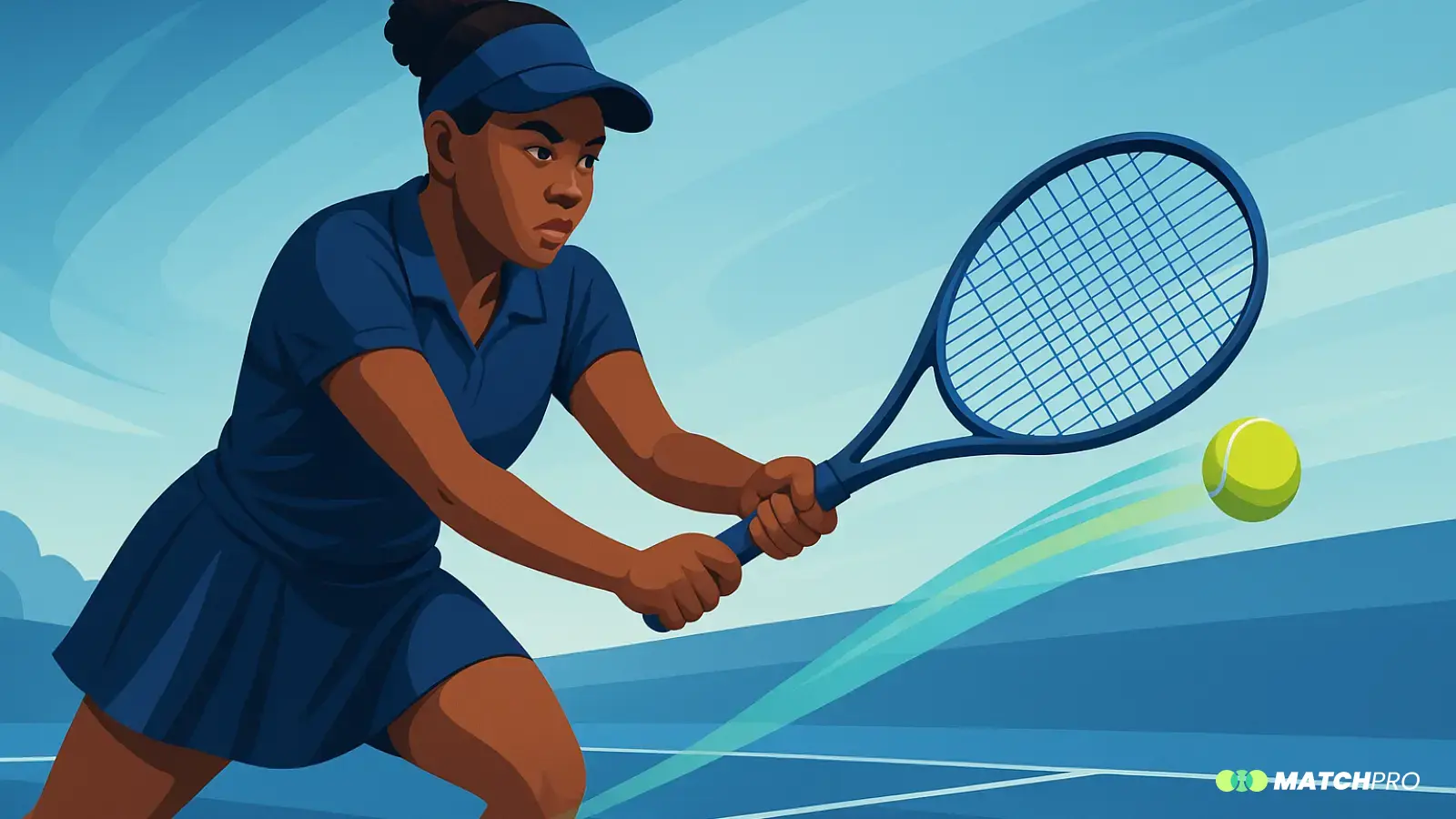
The two-handed backhand provides more control and power, making it a popular choice among players with shorter arms. This stroke allows for better stability and can help generate more topspin, which is crucial for controlling the ball's trajectory.
Techniques for Adapting the Backhand
Footwork and Positioning
For players with shorter arms, footwork becomes even more critical. Quick and efficient movement on the court can help you get into the right position to execute a successful backhand. Practice drills that focus on lateral movement and quick pivots to improve your court coverage.
Grip Adjustments
Experimenting with grip variations can also help adapt the backhand for shorter arms. For the one-handed backhand, consider using an Eastern or Semi-Western grip to increase the racket's reach. For the two-handed backhand, ensure your dominant hand is positioned lower on the handle to maximize control and power.
Swing Mechanics
Focus on compact swing mechanics to enhance your backhand. A shorter backswing can compensate for limited reach, allowing for quicker preparation and execution. Emphasize using your body rotation to generate power rather than relying solely on arm strength.
Drills to Enhance Backhand Performance
Shadow Swings
Practice shadow swings without a ball to refine your technique. Focus on maintaining a consistent swing path and proper follow-through. This drill helps reinforce muscle memory and improves your overall stroke mechanics.
Wall Practice
Hitting against a wall is an excellent way to practice your backhand. It allows you to focus on timing and consistency without the pressure of a live opponent. Aim to hit the ball at different heights and angles to simulate match conditions.
Partner Drills
Engage in partner drills where you and a partner alternate hitting backhands. This exercise helps improve your reaction time and adaptability, crucial for players with limited reach.
Case Study: Professional Players with Shorter Arms
Several professional players have successfully adapted their game to compensate for shorter arms. For example, Kei Nishikori, known for his exceptional footwork and precision, has developed a formidable backhand despite his relatively shorter reach. By studying such players, you can gain insights into effective strategies and techniques.
Conclusion
Adapting the backhand for shorter arms requires a combination of technique, strategy, and practice. By focusing on footwork, grip adjustments, and swing mechanics, intermediate players can enhance their backhand performance. Remember, consistency and perseverance are key. With dedication and the right approach, you can turn your backhand into a powerful weapon on the court.